Teaaround theworld
A samovar, salt, yak butter, a cup just for the aroma, mint tea poured from up high: how tea is drunk in places where nobody sits down at the table without it.
Samovar
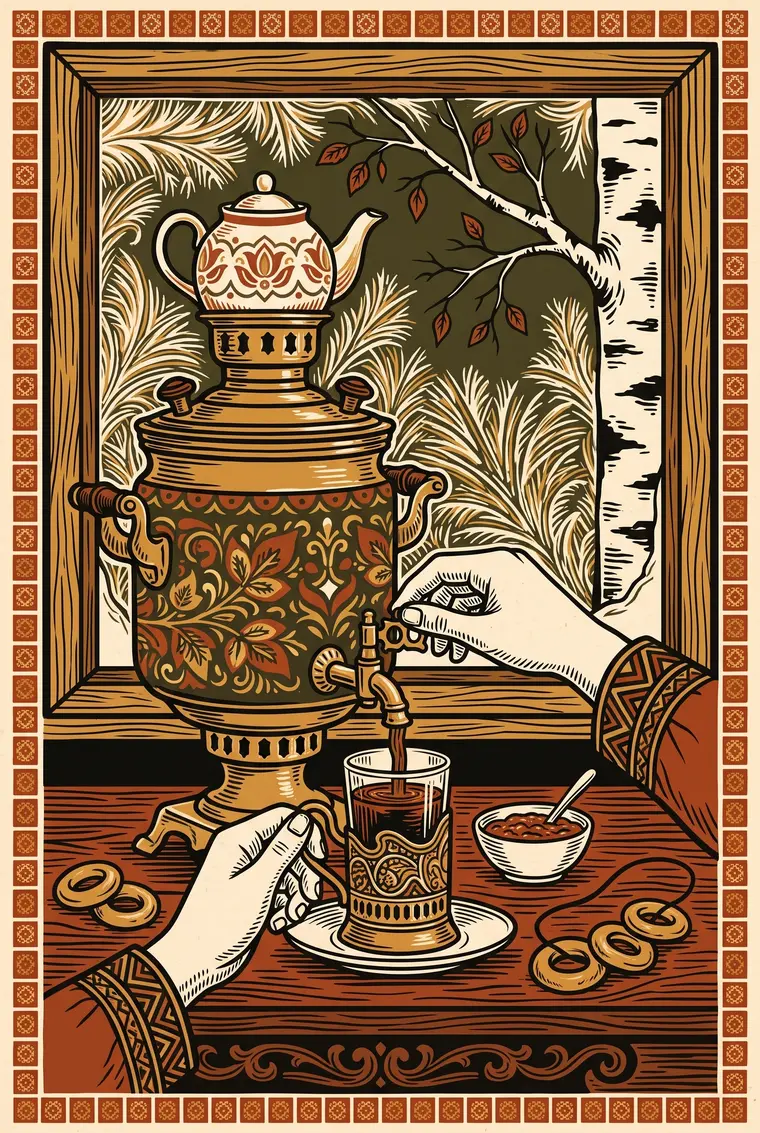
The samovar sits in the middle of the table, with a small teapot of very strong tea on top. Everyone thins it with boiling water to their own taste: from the same samovar, each person gets their own tea.
- vprikuskuyou bite a sugar lump and sip the tea over it, without dissolving it
- vnakladkuthe sugar goes into the cup and is stirred in: the way people with money drank it
- vpriglyadkuplain tea, and you only look at the sugar: the poorest way
- 1778Tula: the first samovar factory, of the Lisitsyn brothers
- 1740but the samovar is older: it appears in the customs books of Yekaterinburg
- 1892the metal glass holder arrives in train carriages
- +1one teaspoon per person and one for the pot
“Taking your own samovar to Tula”doing something pointless · the phrase appears in Chekhov
Сүүтэй цай
“tea with milk”A piece of pressed tea is boiled with water, milk and salt: the taste is slightly salty, not sweet. With a ladle, the hot tea is scooped up and poured back from up high, again and again: the tea fills with air, the milk blends in and a light foam appears.
The guest is served first. People drink it several times a day, especially in the cold: in winter it gets down to −40 °C. Russia’s first tea came from here: in 1638 the Mongol Altan Khan sent it to the tsar.
Po cha
cha süma: “churned tea”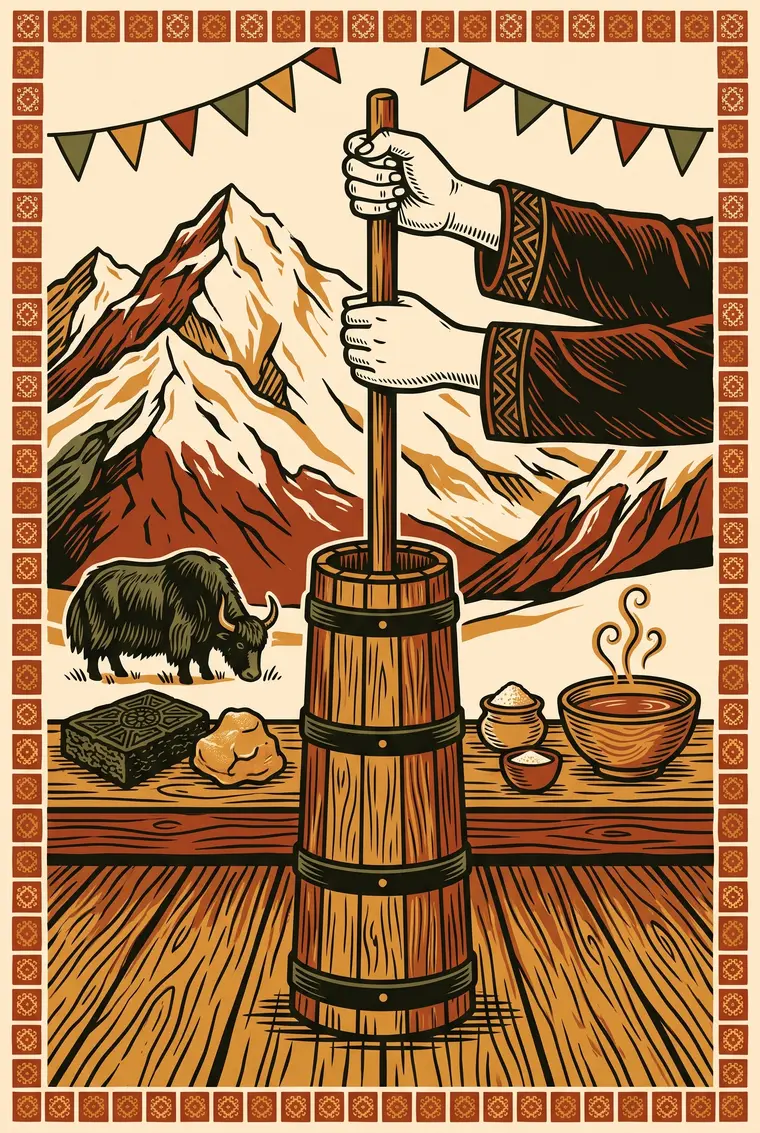
A strong brew of pressed tea boils for hours; then, in a tall wooden churn called a chandong, it is churned with yak butter and salt. Hot and rich, it warms you, feeds you and gives back salt: up in the heights people drink it all day long, by the dozens of cups.
- ≈2250 kmof caravan trails through Sichuan, Yunnan and the Tibetan plateau
- 59 kgof tea for one horse, by the rate of 1074
- 25 000horses a year in the busiest trading years
- 61 kgcarried by a porter who weighed less than 51
had enough? leave your cup full until you go
The host tops you up after every sip: the cup must never be empty. Refusing is rude, so the guest leaves it full and only finishes it when saying goodbye.
Teapets
the clay darkens
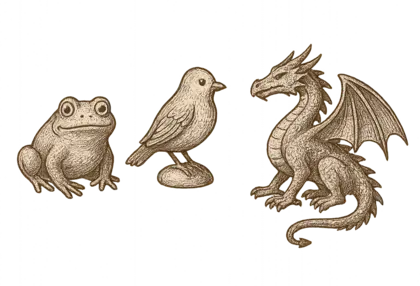
Cha chong are little unglazed figures made of porous Yixing clay. They live on the tea table and get “watered” with whatever is left: rinse water, the tea rinse, the last drops from the chahai. Over months and years, the clay soaks up the oils and aroma and darkens. They have been known since the 13th century.
Tea is served to elders first, with both hands. And in 2022 UNESCO added the Chinese art of tea to its heritage list: six categories of tea and more than 2000 teas.
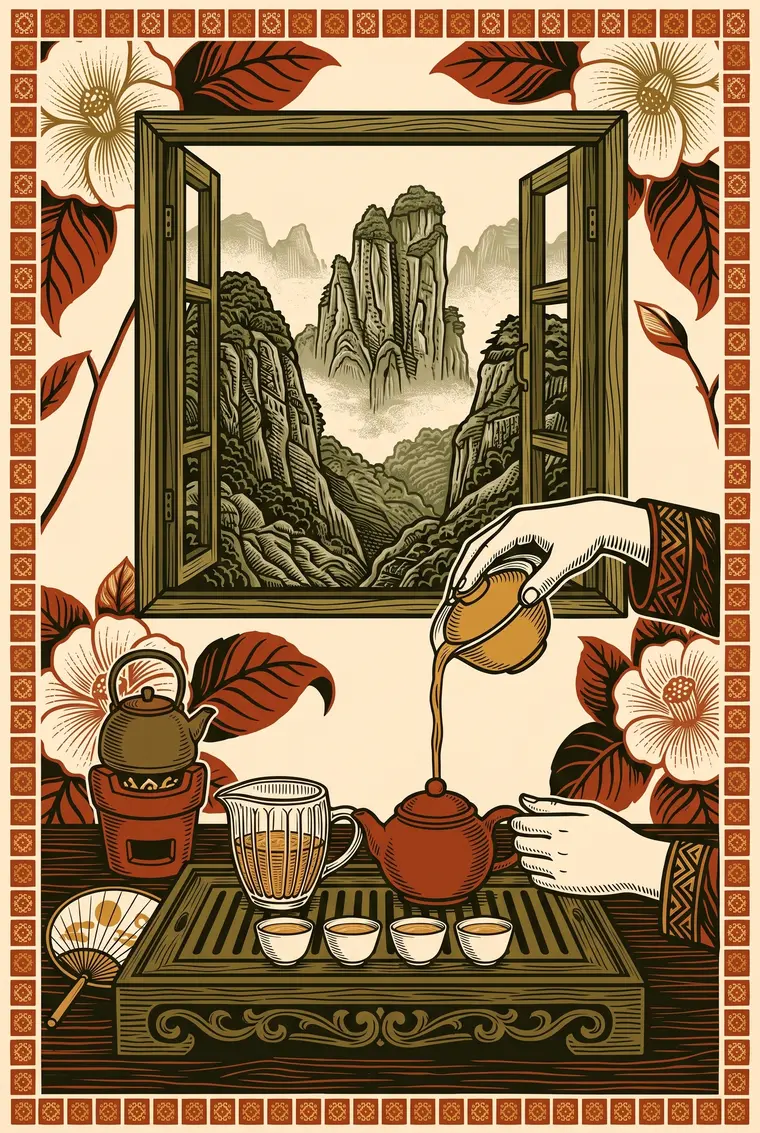
Paired cups
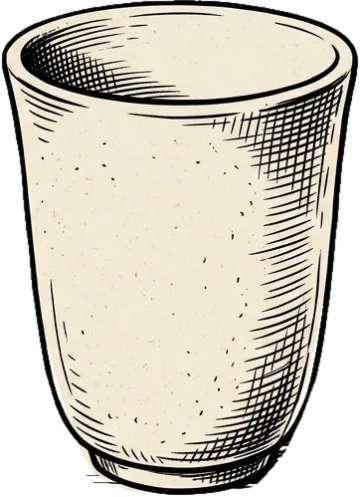
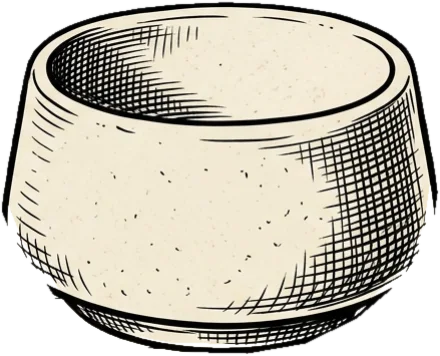
Two cups per person
The tall, narrow one, wenxiangbei, is for the aroma; the wide one, pinmingbei, is for drinking. They were invented in Taiwan in the 1970s, and by the 1980s they were a normal part of a tea set.
Pour and pass
First the tea is poured into the tall cup, then it is passed into the wide one.
Aroma first
The tall cup, now empty, goes to your nose: the aroma is left on its walls. This way you take in the scent on its own, and then the taste.
- 1869John Dodd ships Taiwanese oolong to New York under the name Formosa Oolong
- 16 millionpounds of tea exported by Taiwan in 1885, against 180 000 in 1865
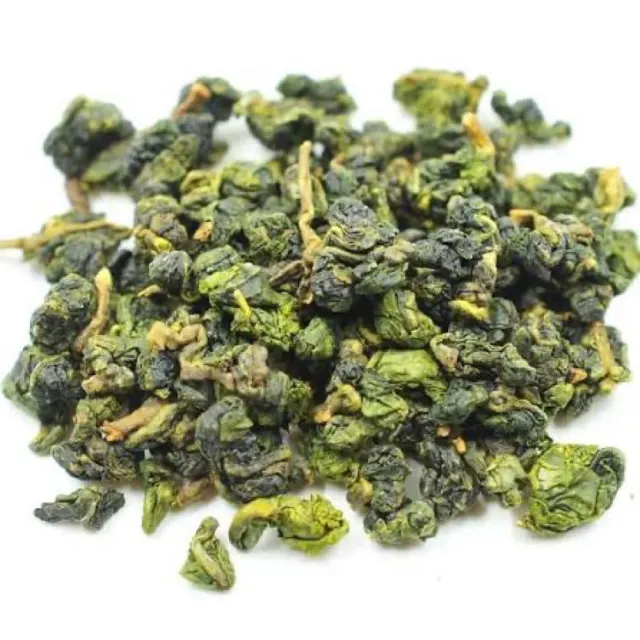
Dongfang Meiren oolong, “Oriental Beauty”, is made from leaves bitten by tiny leafhoppers. In response, the plant releases defense compounds, and the tea gets its honey and flower taste. It is not a legend: it is an alliance between insect and bush, confirmed by science.
In the big one below, the water boils; in the small one on top sits the strong brew. In the glass it is thinned with boiling water to whatever strength you like. And the glass is a “tulip”, ince belli bardak, “slim-waisted”: at the bottom it keeps the heat longer, and at the top, where it is wider, it cools faster and doesn’t burn your lips.
- 1924a tea law and a nursery in Rize
- 193720 tonnes of seeds from Batumi
- 1938first big harvest
- 1947first tea factory
About 3.16 kg of tea per person a year, roughly four glasses a day. In 2022 UNESCO added the tea culture of Turkey and Azerbaijan to its heritage list: a symbol of hospitality and conversation.
Atay
the higher, the more respect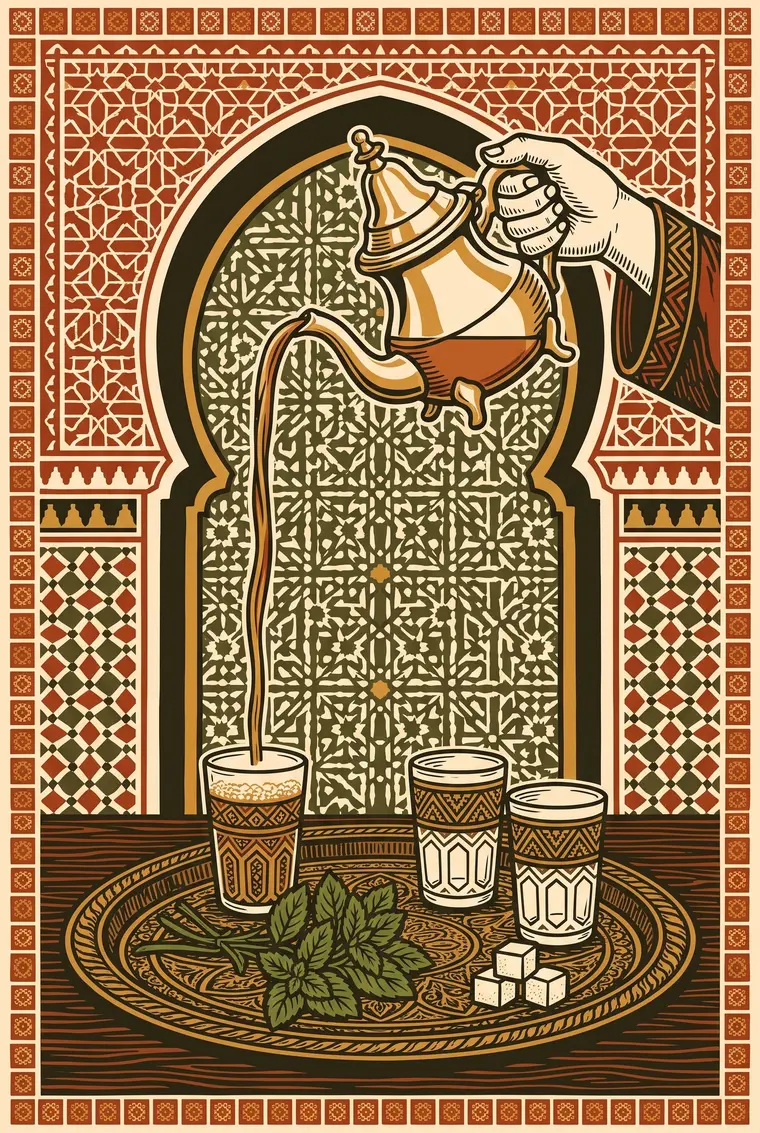
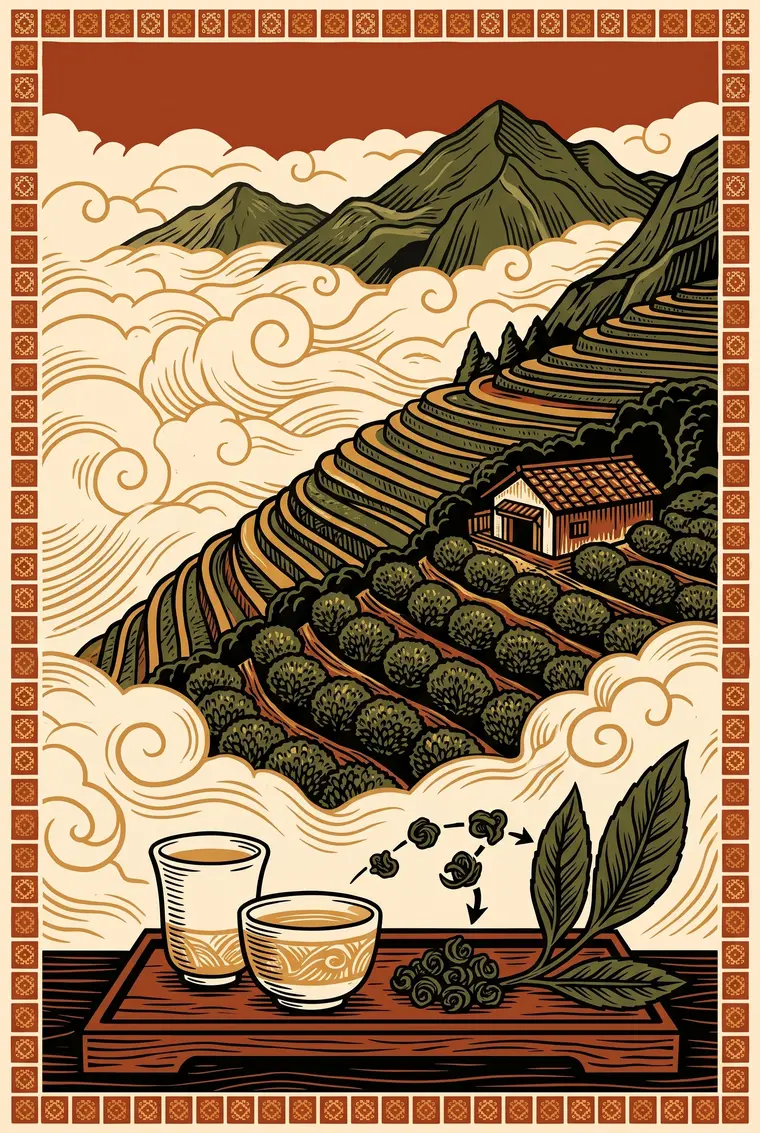
Green tea, a bunch of fresh mint and lots of sugar, in a metal teapot with a long spout, the berrad. It is poured from up high: a foam rises to form a “crown”, the tea cools a little, and the guest is honored. Everyone is served three glasses from the same leaves, and each one tastes different.
Tea arrived because of the Crimean War
Historian Graham Cornwell did not find a single source for this story. There was already tea at the sultan’s court around 1700, but it stayed a luxury for a long time; it became widespread after the trade treaty of 1856, which lowered tariffs.
And as a joke, mint tea is called “Berber whisky”: in a country where alcohol is frowned upon, tea took its place at the table.
Milk or tea?
- sandwichesbottom tier
- sconeswith cream and jam
- sweetslast
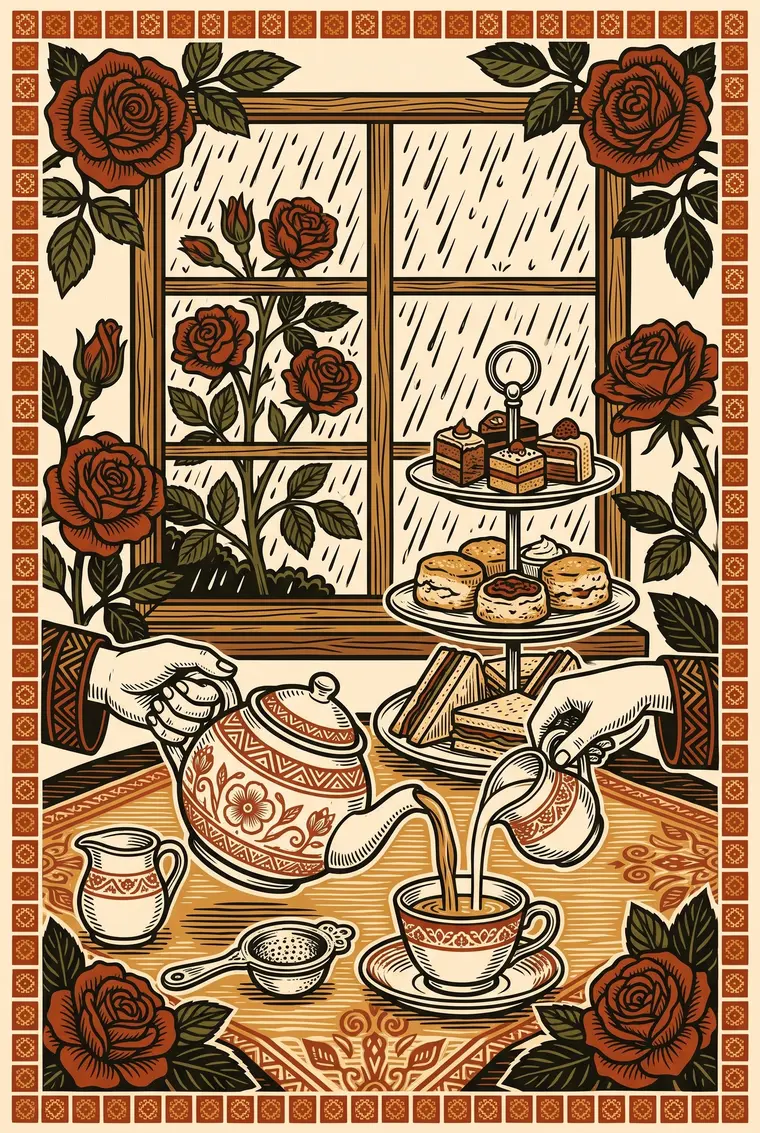
Afternoon tea is linked to the Duchess of Bedford, around 1840: lunch was early, dinner was at eight or nine, and by five o’clock you wanted tea with bread and cake. But that is more of a pretty story: similar afternoon teas were known a hundred years earlier.
The ISO 3103 standard explains how tasters in different labs can brew tea exactly the same way: pot size, amount of leaf, exactly six minutes. In 1999, for all that detail, it won an Ig Nobel, the joke prize.
Tea in the Andes
In 1913, 120 pounds of tea seeds travel from Yokohama on the steamship “Anyo Maru” and are planted on an estate in the Huyro valley, in Cusco. The first harvest comes in 1915.
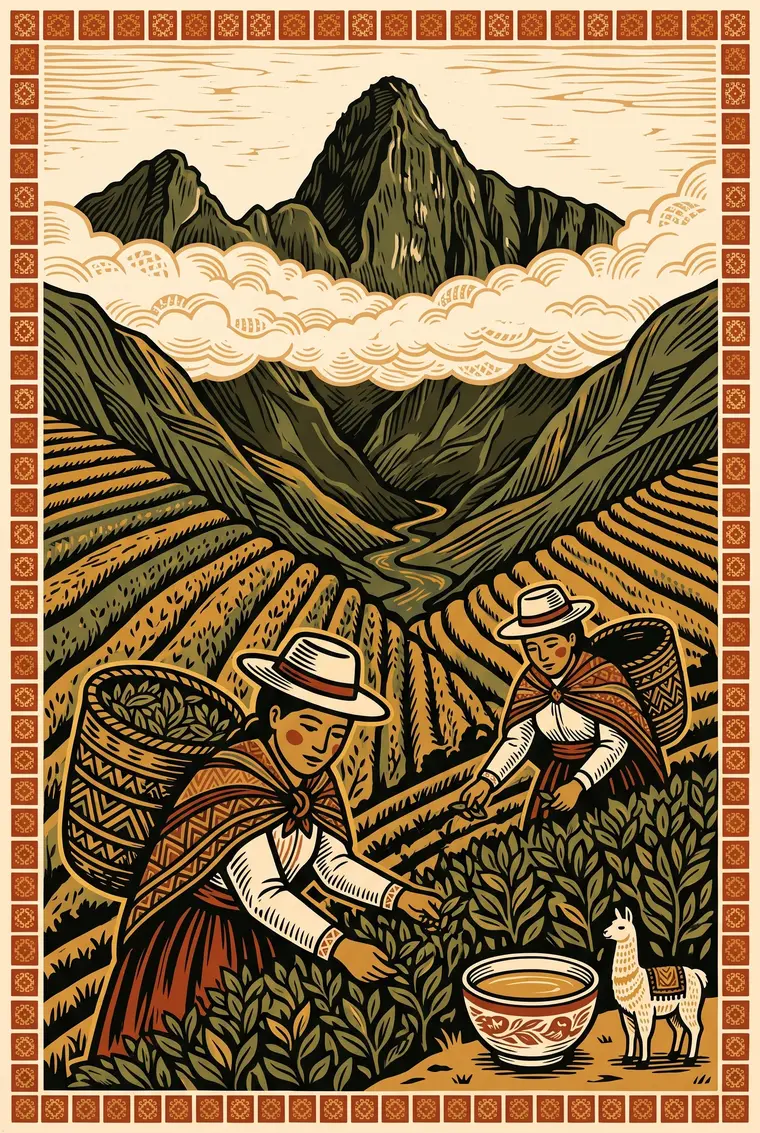
2521 mabove sea level, the plantationsby handno machine can work the steep slopes
- 15–25 kgof hand-picked leaf gathered by one picker a day
- 2023silver at a tea competition in Paris, for a white tea from Incatambo
Peru has no tea ceremony of its own, with special teaware. Here “té” means any hot infusion, and it is drunk at lonche, the late-afternoon snack, just like coffee.