
Who we are
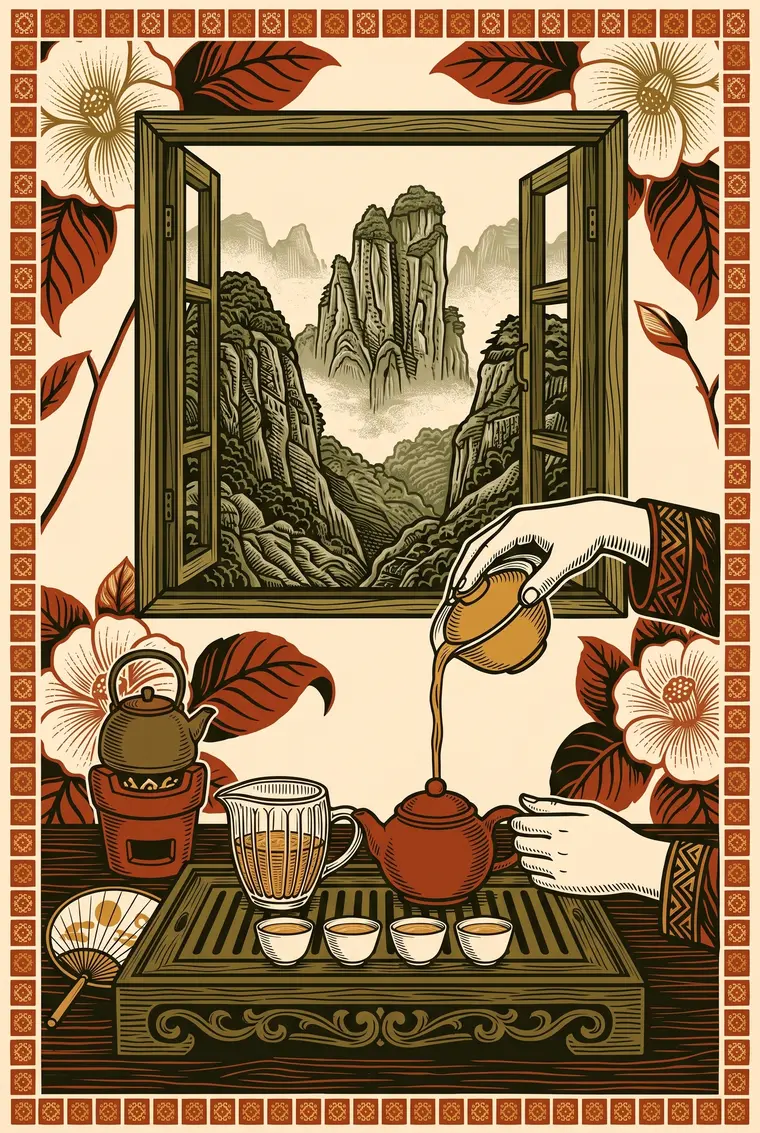 China
China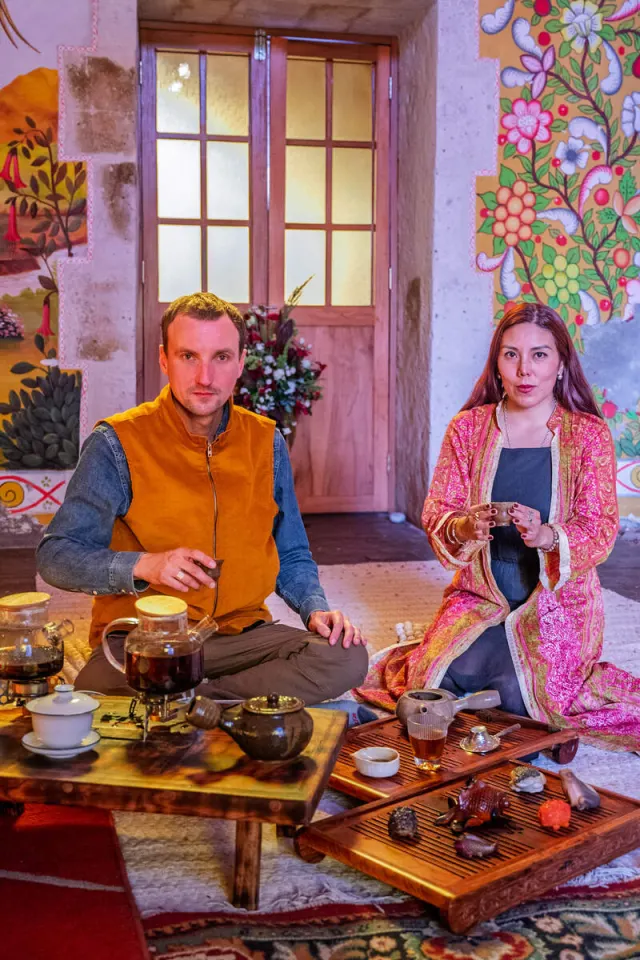
There are two of us, a Russian man and a Peruvian woman, and this is our Tea house in Pisac, Calle Callao 200. He came from Moscow with twenty-five years of tea behind him; she is from Arequipa and came to tea through a cup she couldn't explain.
Chamánte
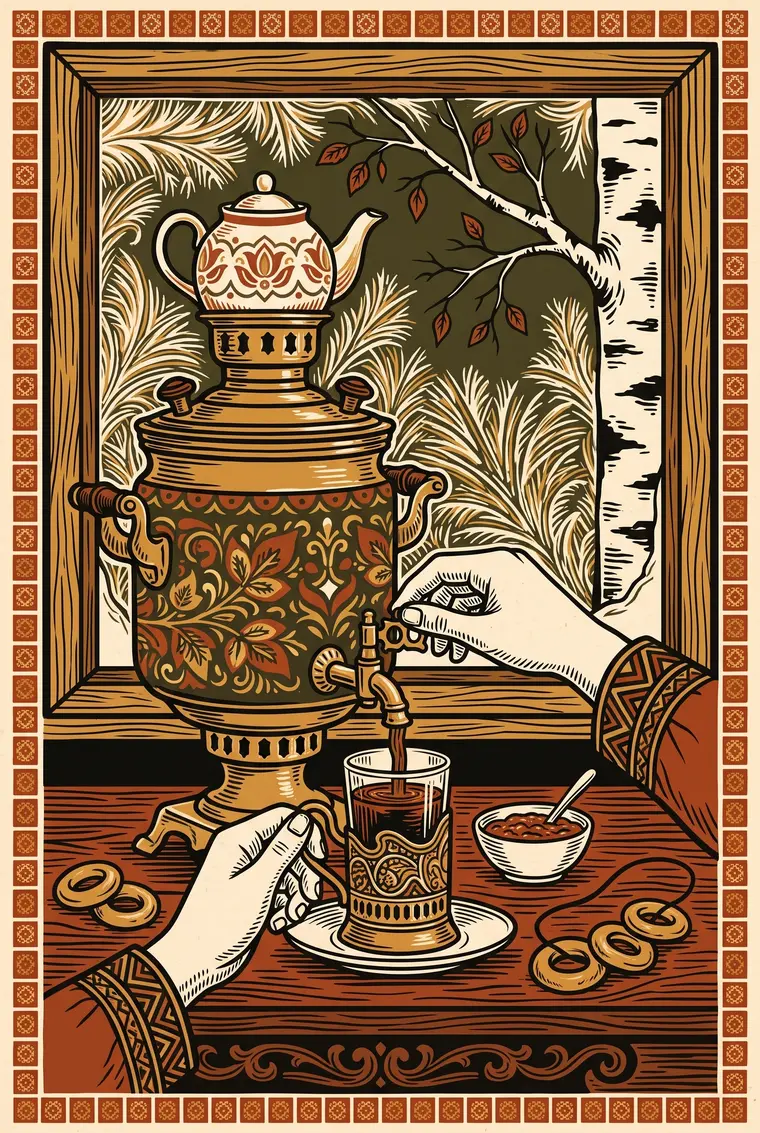
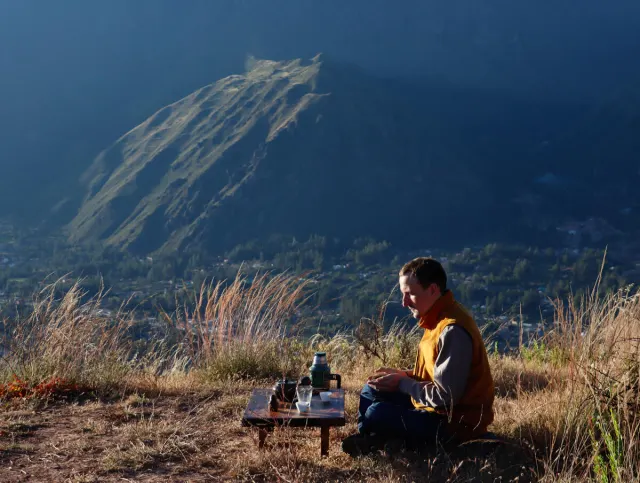
with shu pu-erh
He is from Moscow and has lived in Peru for almost ten years. He started drinking tea at school, in Russia, with shu pu-erh, which is still his favourite. He has been studying and drinking tea for almost twenty-five years, and holds a tea master diploma.
to open up tea culture in Peru
What brought him here fits in a single line: the same one that hangs on the wall of the house.
- 25 yearswith tea, since school
- 10 yearsin Peru
- shu pu-erhhis tea
- diplomaas a tea master
Madame Teína
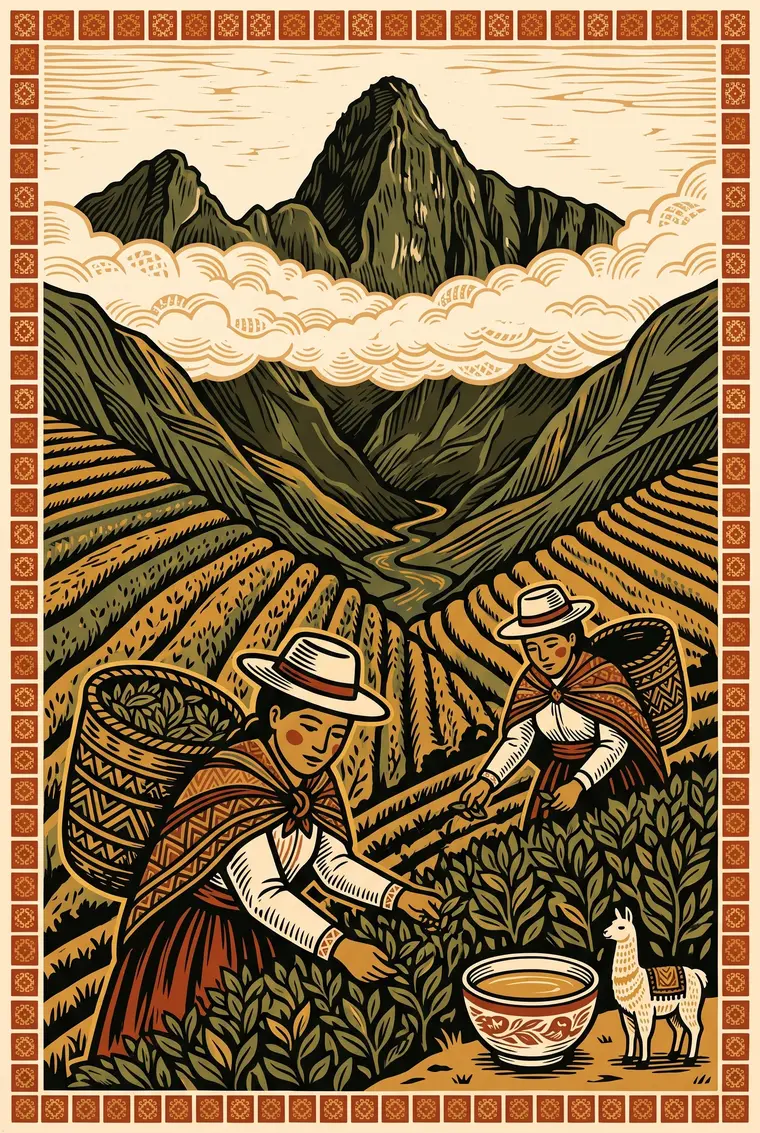
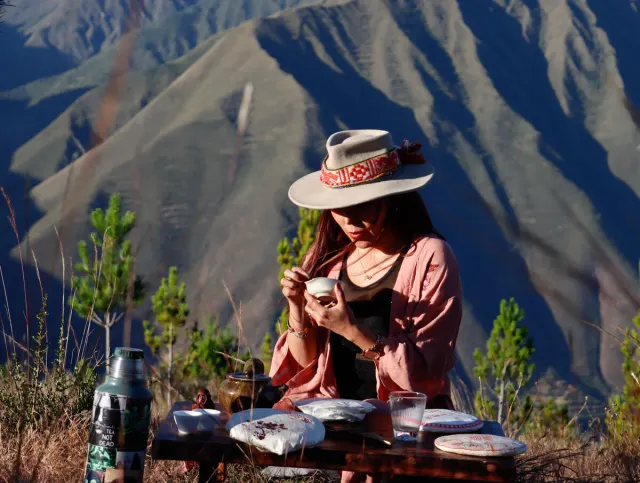
and sheng pu-erh
She is from Arequipa. She came to tea through a Chinese New Year celebration, where she met Chamánte; her first gongfu cha came later, and with it a question that still hasn't let go of her.
By the third, the fourth cup, a much deeper, more spiritual connection with the tea bowl appeared
At the house she leads the ceremonies and welcomes the guests, and she also looks after everything to do with the eye: the design, the decoration, how things look. She laughs a little about her name: “At ceremonies we always give each other tea names, because when we drink a lot of tea, we get sort of tea-drunk.” The name was given to her by a friend from the tea world.
I'm in the process of discovering how to become a servant of tea
- swanher totem
- Ñustaher name in the Andean worldview
- sheng pu-erhher tea: aged, from old trees
- ceremoniesguests, design and decoration
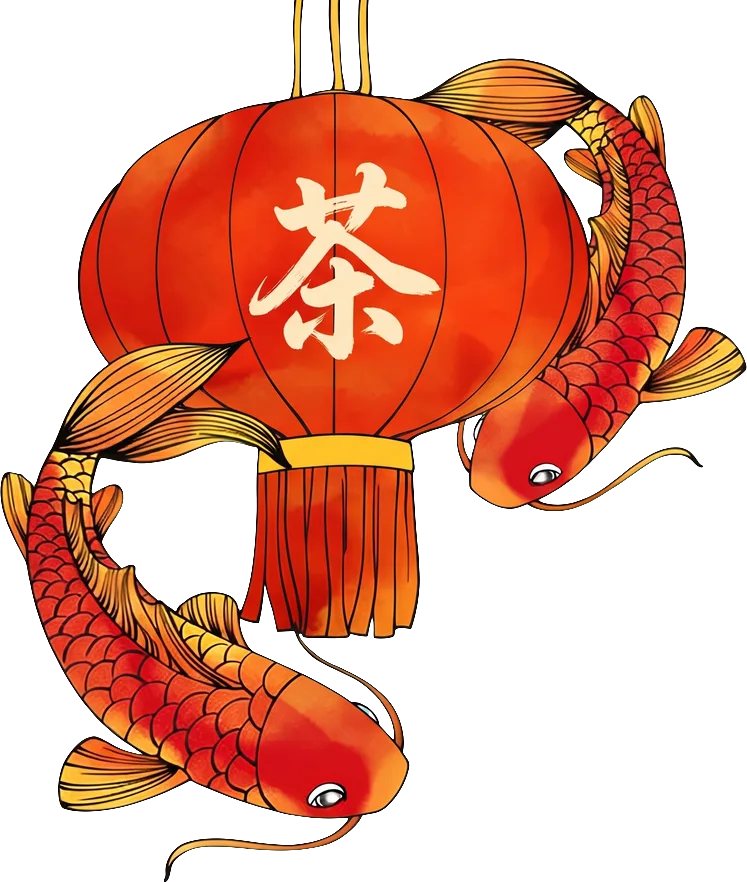 茶 — “tea”
Chinese New Year
They met at a Chinese New Year celebration, at a tea ceremony he was leading. That ceremony gave her her first cup, and the first cup led to everything else.
here three threads
came togetherRussia · Peru · China
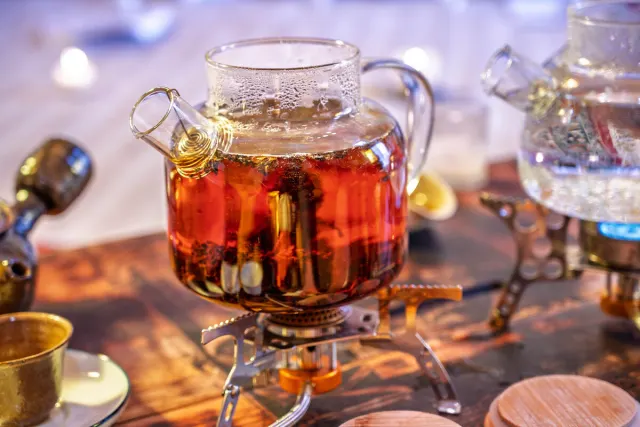
It isn't coffee: it's something else. You only get it by the third or fourth cup, when you stop drinking and start noticing.
In the Sacred Valley they simply crossed paths, with no plan and no sign. While they had no place of their own, they held ceremonies in other spots; in February 2026 they rented a space here and opened the country's first Tea house. Today it's tea from the menu, guests, ceremonies and trips into the mountains when someone asks.
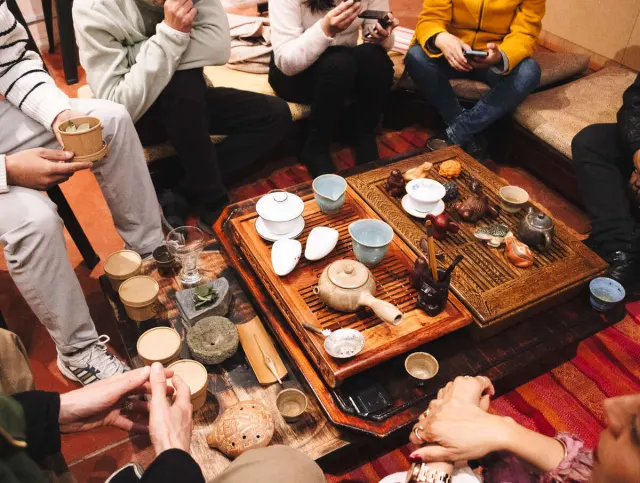
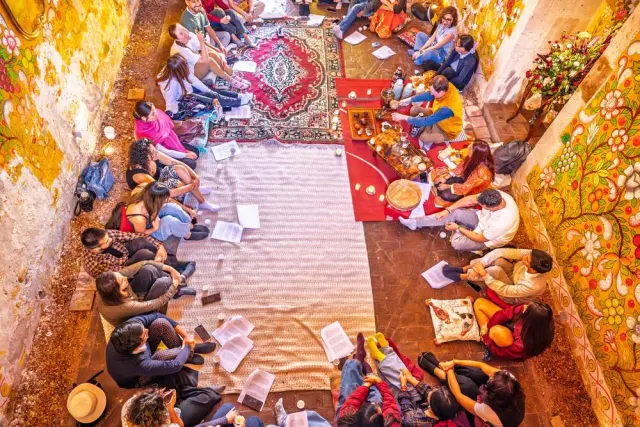
TEJA VUH comes from the French “déjà vu”. It's a play on words: when someone drinks tea for the first time, they get something like déjà vu, the feeling they've been here before.
you've been here before