Matcha powder in Peru: ceremonial matcha and matcha for latte, shipped nationwide
Bright green, thick foam, two names and no odd letters.
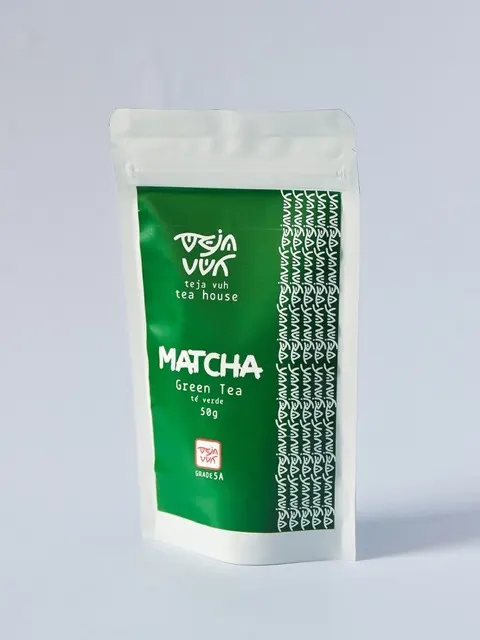
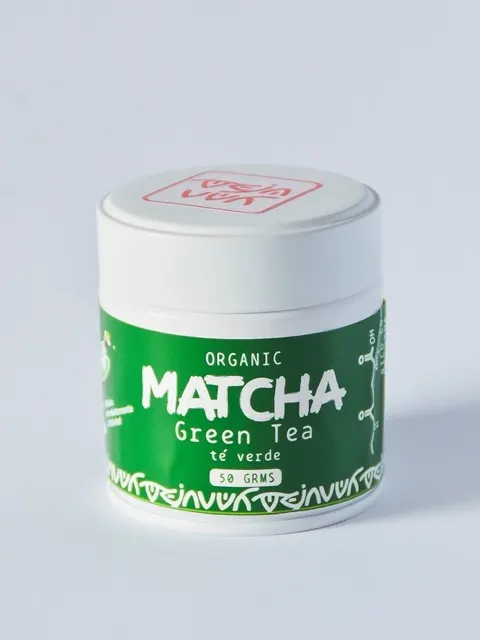
We sell matcha green tea powder in two versions: matcha in 50 g and 100 g bags, from S/ 50, and ceremonial matcha in a 30 g tin. There is also hojicha powder, roasted, for the afternoon. Shipping anywhere in Peru is S/ 20, free from S/ 150; our tea house is in Písac, Cusco, where you can taste before you buy.
5.0 ★ on Google — 76 reviews
A tea house in Písac, Sacred Valley: the same matcha served in a bowl, the «first foam» workshop, and pickup.
Yape and Plin · shipping S/ 20 anywhere in Peru, free from S/ 150 · 2 to 4 business days · pickup in Písac
Choose your matchatwo matchas · hojicha · whisk, bowl and scoop · delivery across Peru, free from S/ 150
Two matchas and hojicha
Matcha for every day, pure or with milk. Ceremonial matcha for when the matcha is the centre of attention: koicha, guests, gifts. Hojicha for the evening.
Which matcha suits me
The difference between the matchas is the grind and how you drink them.
I want it like in a café, a latte every morning
Matcha 50 g or 100 g: milk doesn't drown it. A 50 g bag makes 25 cups; 100 g makes 50.
I want it plain, with a whisk, properly
Ceremonial matcha 30 g: sweeter, finer grind, denser foam. 15 cups of usucha.
In the evening
Hojicha 50 g: roasted leaf, caramel and nut.
I don't know where to start
Matcha 50 g and a whisk — the builder below puts them together for less.
Build your own ritual — cheaper together
Matcha and what you make it with. Tick what you are taking: from two items there is a discount, and one set goes into the cart.
Ready combinations with one tap:
Matcha and hojicha
What you make it with
Matcha latte at home — S/ 2 a cup
A 50 g bag is 25 lattes: S/ 50 for 25 cups. Milk does not drown it, and it is the same ceremonial matcha people drink plain, just made another way. Two minutes; the whisk if you like.
Hot latte
2 g matcha, 50 ml water at 75 °C, whisk, top with 150 ml hot milk. Syrup optional.
Iced latte
2 g, 50 ml of water, whisk, ice, 150 ml of cold milk. In summer — the most frequent order.
With plant milk
Oat and almond don't mask the taste; coconut is sweet on its own, no syrup needed.
Without a whisk
2 g and 70 ml of water in a jar with a lid, ten seconds of shaking. The foam is finer, but it's there.
How to make matcha at home
Three steps — and foam. It works without a whisk too: a closed jar and ten seconds of shaking.
Sift 2 g
One heaped chashaku — exactly one cup. Through a sieve — no lumps.
70 ml of water at 75 °C
Not boiling: that brings bitterness. Let the kettle rest two minutes after boiling.
Whisk with the chasen
15 seconds of quick W-shaped strokes, until the foam is fine.
Latte: pour in the milk
150 ml of hot or cold milk over the whisked matcha.
What people drink matcha for — and what we do not promise
Even energy for three to four hours. About weight loss and health we promise nothing: matcha is food, not medicine.
Whenmorning and afternoon; in the evening — hojicha
What is in itthe whole leaf: you drink the leaf itself, not an infusion
What we do not promiseweight loss, skin, cures: matcha is food, not medicine
Take careduring pregnancy and with illnesses, ask your doctor
What matcha is and what it's made of
Three weeks before harvest the bushes are covered with netting. In the shade the leaf builds up chlorophyll and amino acids — hence the bright colour and the sweet umami. The leaf is then steamed, dried, stripped of its veins (that is tencha) and ground into powder.
You drink the leaf itself, not an infusion, — so everything in the leaf goes whole into the cup. One cup is 2 g of powder.
This is how matcha is made in both Japan and China: three weeks of shade, steaming, tencha.


Morning or evening: matcha or hojicha
The same green leaf. Matcha is shade-grown and milled, hojicha is roasted — and you get two different days.
Taste
Matcha: sweet umami, grass, cream. Hojicha: caramel, roasted nuts, smoke.
When
Matcha is for morning and daytime. Hojicha is for the evening, even late.
How they are made
Matcha: 75 °C and a whisk. Hojicha: 90 °C, and it dissolves without one.
Colour
Matcha is bright green. Hojicha is reddish brown.

How to tell real matcha
All of this shows in the bowl and on your fingers, before you believe any label.
Colourbright green; yellow-green means old or a low grade
Grindpowder with no grit, melts between your fingers
Foamfine, dense and lasting
Tastesweet umami; bitterness means boiling water or culinary powder
Storagethe fridge, tightly closed and away from smells
Pricea ceremonial one under S/ 1 a gram is a reason to ask what is inside
Try it first — in Písac
At the tea house there is matcha by the bowl from the menu, hojicha latte and the «first foam» workshop. Tea from the thermos is on us during opening hours.
WhereCallao 200, Písac, Sacred Valley
When09:00–19:00, closed Mondays
Whatpure matcha and latte, hojicha, loose-leaf tasting
Reviews5.0 ★ · 76 Google reviews
Pickupwebsite orders can be picked up here
Workshop«first foam»: an hour at the table, and you leave with your own bowl

What people ask about matcha
How do matcha and ceremonial matcha differ?
Ceremonial matcha has a finer grind, sweeter taste and denser foam — it's chosen for drinking pure and for gifts. Both are prepared the same way.
Is it OK during pregnancy?
Ask your doctor: we do not give medical advice.
Does it help you lose weight, is it good for skin?
We do not promise that. Matcha is food, not a remedy. If that is what you are after, do not buy it for that.
Does matcha come in tea bags?
What's sold in bags is green tea with some powder added. Real matcha is powder only, and you drink all of it.
How does ceremonial differ from culinary?
Ceremonial is the first harvest of shaded leaf, sweet, for straight matcha. Culinary is bitter, for baking; we don't carry it.
How is it different from supermarket matcha?
By grade and freshness. In a supermarket it is usually culinary powder: darker, bitter, for baking. Look at the colour: yellow-green means old or a low grade.
Where to buy matcha in Lima?
With us: delivery across Peru, free from S/ 150. Pickup in Písac.
How much does a bowl cost?
A 50 g bag is S/ 50 and makes 25 bowls: that is S/ 2 a bowl. The 100 g works out at S/ 1,8 a bowl. We confirm exact prices on WhatsApp.
From matcha people usually move on to leaf
The same bush, but with the leaf whole: green, a light oolong and, for the evening, white. Or in sets of three samples.


Looking for manzanilla, muña or hierba luisa?
We don't have them — and we say so plainly. We keep tea leaf: white, green, oolong, red, pu-erh. Tell us what you wanted the herb for and we'll pick the leaf that does the same, only tastier.
What did you want the herb for?
instead of manzanilla
White tea: soft, honeyed — a tea for the evening.
Santa Paca — white leaf from Cusco. Water at 80 °C, three minutes, can be brewed twice.
instead of emoliente, boldo
Pu-erh: dark, dense, 'earthy' — what people in China drink after a heavy meal.
Shu pu-erh is never bitter or sour; 12 g lasts a week of dinners.

instead of muña
Floral oolong: fresh, energising without jitters, seven infusions from one spoon.
Tie Guan Yin is the most recognizable oolong, with a lilac note.
instead of hierba luisa
Green leaf from the Peruvian highlands: fresh, grassy, with a lemon note.
Pacha Alpaquita — green from Cusco. Water at 80 °C, never boiling.
instead of mate de coca
Peruvian red: strong, sweet, from the Cusco mountains — for the morning.
Vicuña Roja — red leaf from Cusco; wakes you up like coffee, without the edge.

It's not a herb — it's leafCamellia sinensis: herbs are brewed once, tea leaf holds several infusions.
Sample from S/ 12Less than a cup of coffee. If you don't like it, you've lost S/ 12, not a whole pack.
Brewing is easier than it looksA mug, a spoon of leaf, water below boiling. Temperature and time are on the packet.
Build your set
Ready sets of three samples — or build your own. A set costs less than buying separately.
Or build your own
Samples are different teas on one table: China, Taiwan and the Cusco valley.
One evening, one gaiwan, and you know which tea is yours without buying full bags.
Three samples: 5 % off; six: 10 %.
Ready sets with one tap:
Chinese tea
What matcha is made with
Bowl, whisk and scoop — handmade by us. Each piece carries its own number.


Accessories for the Japanese tea ceremony
Chawan, chasen and chashaku — bowl, whisk and measuring scoop. Bought together with matcha.
Teaware
Handmade by us: cups, teapots, gaiwans, shiboridashi, chahai, matcha bowls and tea pets. Every piece has its number.


We confirm your order on WhatsApp
Delivery across Peru or pickup in Písac — whichever suits you.
Put your order together
Tick the teas and sizes: the list goes off in a single message and you fill in nothing.
We confirm and you pay
A person confirms availability. You pay by Yape, Plin or bank transfer; cash on pickup.
Questions about matcha
Is matcha the same as green tea?
It is green tea, handled differently: the leaf grows in the shade, is ground to powder and you drink the whole thing, suspended in water. That is why the colour is deeper and the texture thicker. Loose green tea is infused and the leaf stays in the pot; matcha leaves nothing behind.
What does matcha taste like?
Fresh grass, and something sweet and savoury at once — umami, in Japanese. It turns bitter only from boiling water or too much powder: 2 g at 80 °C does not. Ceremonial matcha is rounder; the everyday one holds up better in milk.
How much does matcha cost and how far does it go?
The 50 g bag is from S/ 50 and makes 25 cups of 2 g; the 100 g bag, from S/ 90, makes 50. The 30 g ceremonial tin is from S/ 120. Price per cup is in the table above.
Where can I buy matcha in Peru if I am not in Cusco?
You order on WhatsApp and it ships anywhere in Peru: S/ 20, free from S/ 150, with tracking. The physical shop is the tea house at Callao 200, Písac, Cusco, open 09:00–19:00 except Mondays. There is no shop in Lima, but you can buy just the same and the shipping price is one for the whole country.
Can I make matcha without a whisk?
You can, but the foam is not the same. Without a chasen a jar with a lid works: 2 g, a little water, shake hard, then top up. If you drink it often, the bamboo chasen is from S/ 50 and it genuinely changes the texture.
Iced or hot?
Both. Iced comes out sweeter and less bitter, because cold water extracts less: 2 g, a splash of water to dissolve, then ice and milk. Hot: water at 80 °C, never boiling.
What people ask before ordering
Six answers to the doubts that most often stop the click.
How to order
Build your order and send the list on WhatsApp in one message: we confirm availability, you pay after.
How much is delivery
Courier across Peru: Cusco S/ 12, Lima S/ 18, other regions S/ 20. Free delivery from S/ 150. Pickup in Písac — free.
Can I pick it up myself
Yes, at the tea house in Pisac: Callao 200, 09:00–19:00, closed Mondays.
What if I don't like the tea
Tea is food and can't be returned. That's why there are S/ 12 samples — so you don't risk a whole pack.
Do you have herbal teas
We keep tea leaf, not herbs: no manzanilla, muña or hierba luisa. For something gentle, take white or oolong.
Do you have a complaints book
Yes, the Libro de Reclamaciones is a separate page.
What comes with your order
Two conditions, and both are simple.
A free sample with your first order
If this is your first order with us, we add a sample on top. No need to choose it — we pick it for you.
Free delivery from S/ 150
An order from one hundred and fifty soles ships across Peru at our cost. Below that, delivery is S/ 20.
Matcha for cafés and coffee shops
Latte on the menu, a whisk and barista training. The wholesale price depends on volume: tell us how many cups a month and we will work it out.
Tea your neighbours don't have
Peruvian leaf from Cusco on the drinks menu — something your guest has almost certainly never tried.
One supplier instead of three
Chinese classics, Peruvian tea, matcha and teaware come from one person: one invoice, one delivery.
Service and teaware
Gaiwans, teapots and cups for your service — some handmade, from our own workshop.